
Guide’s PlayhouseMusic · Listening room

Guide’s Listening Rooms

Classical Room. Explore works. Choose a recording.

In classical music the work and the performance are two different questions. The Classical Room keeps them apart, so a concerto is a piece you can follow movement by movement — and a choice between performers — rather than a run of numbered tracks.

From work to recording

1

Albums

Browse classical albums as they were issued — composer, performers, label — with full tracklists.

2

Works & pieces

The app inspects track titles such as “Piano Concerto No. 20 in D minor, K. 466: I. Allegro” and groups the movements into the work they belong to.

3

Recordings

Open a work and see the recordings of it in your library, so you can choose a performance — or compare two.

4

Listen in order

Play the work from its first movement. Now Playing keeps the work and movement in view, and Signal Path shows how it reaches your system.

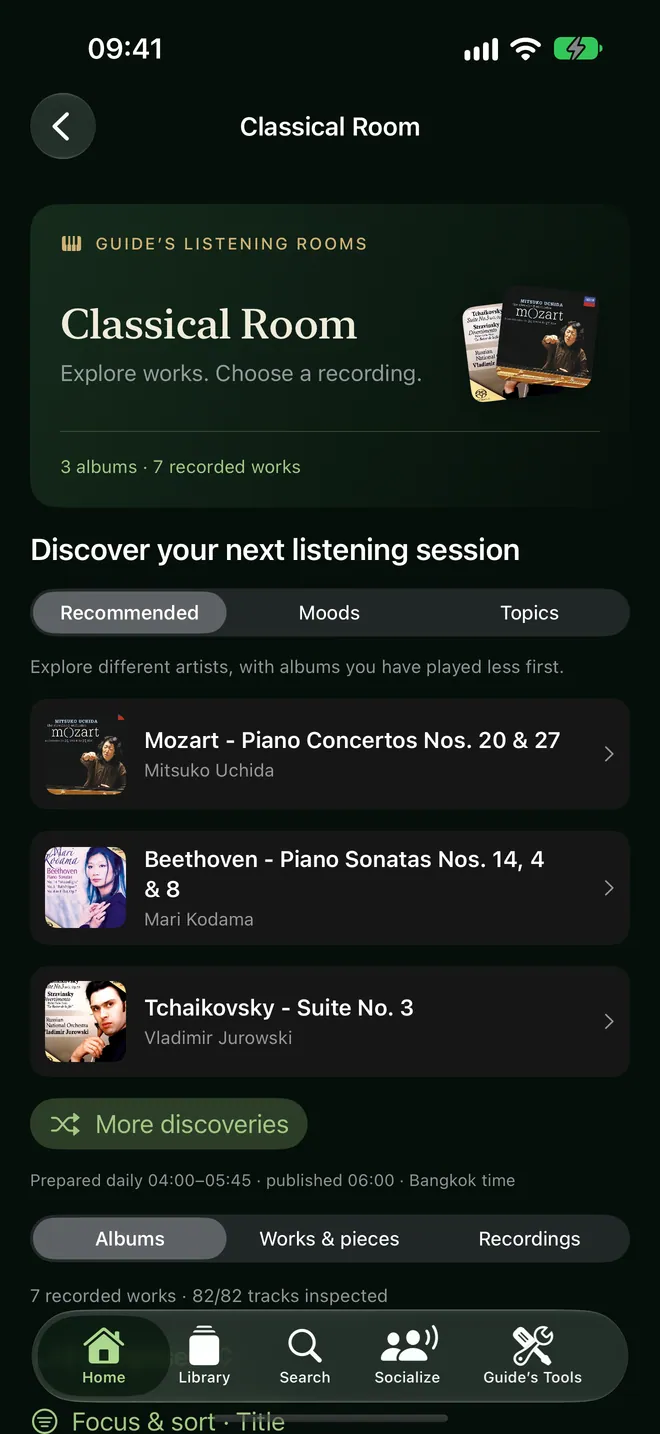
Classical Room on iPhone
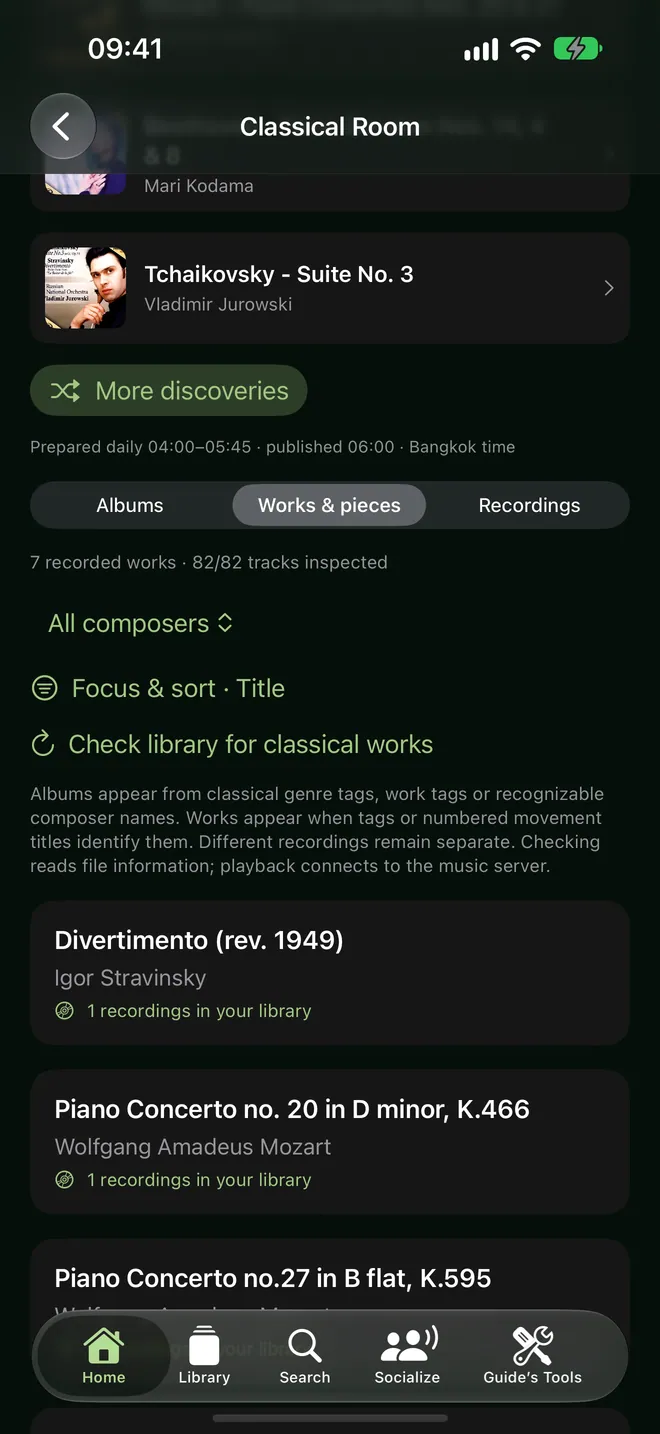
Works & pieces on iPhone: 7 recorded works, 82 of 82 tracks inspected; Stravinsky Divertimento (rev. 1949) and Mozart Piano Concerto No. 20 in D minor, K. 466
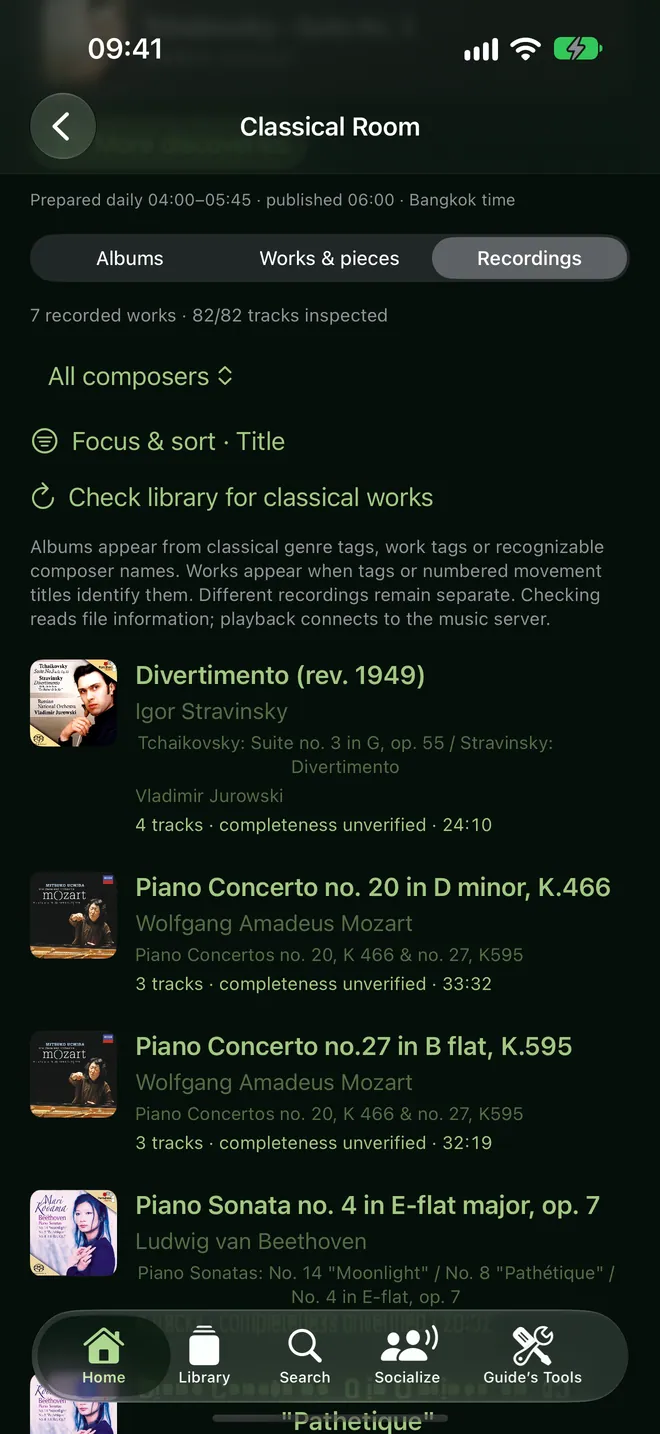
Recordings on iPhone: Divertimento with Jurowski (4 tracks, 24:10) and Piano Concerto No. 20 with Uchida (3 tracks, 33:32)

Simulator captures with a fixture library; no audio was played.

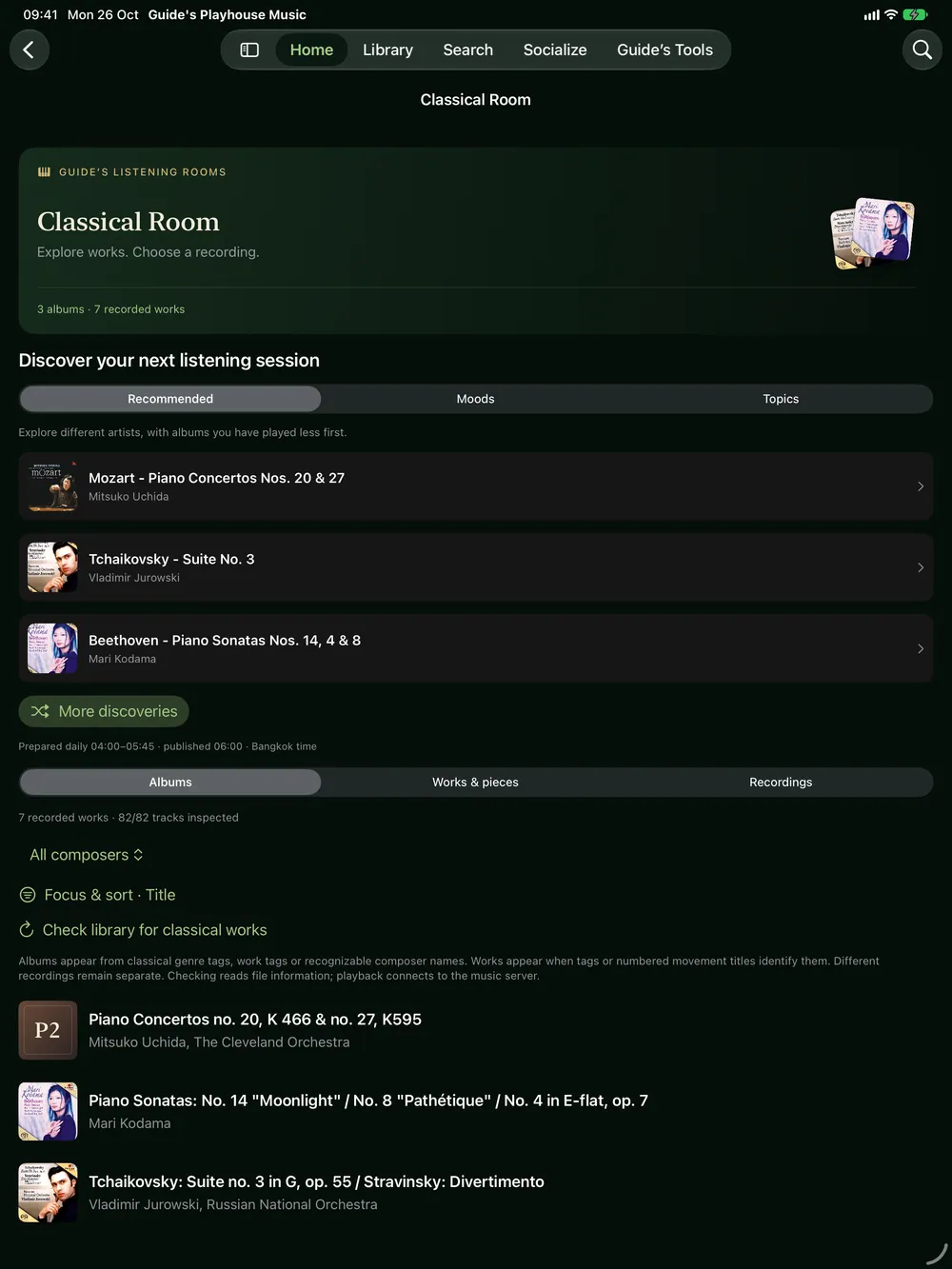
Classical Room on iPad: 3 albums, 7 recorded works; Recommended Mozart, Tchaikovsky and Beethoven with covers
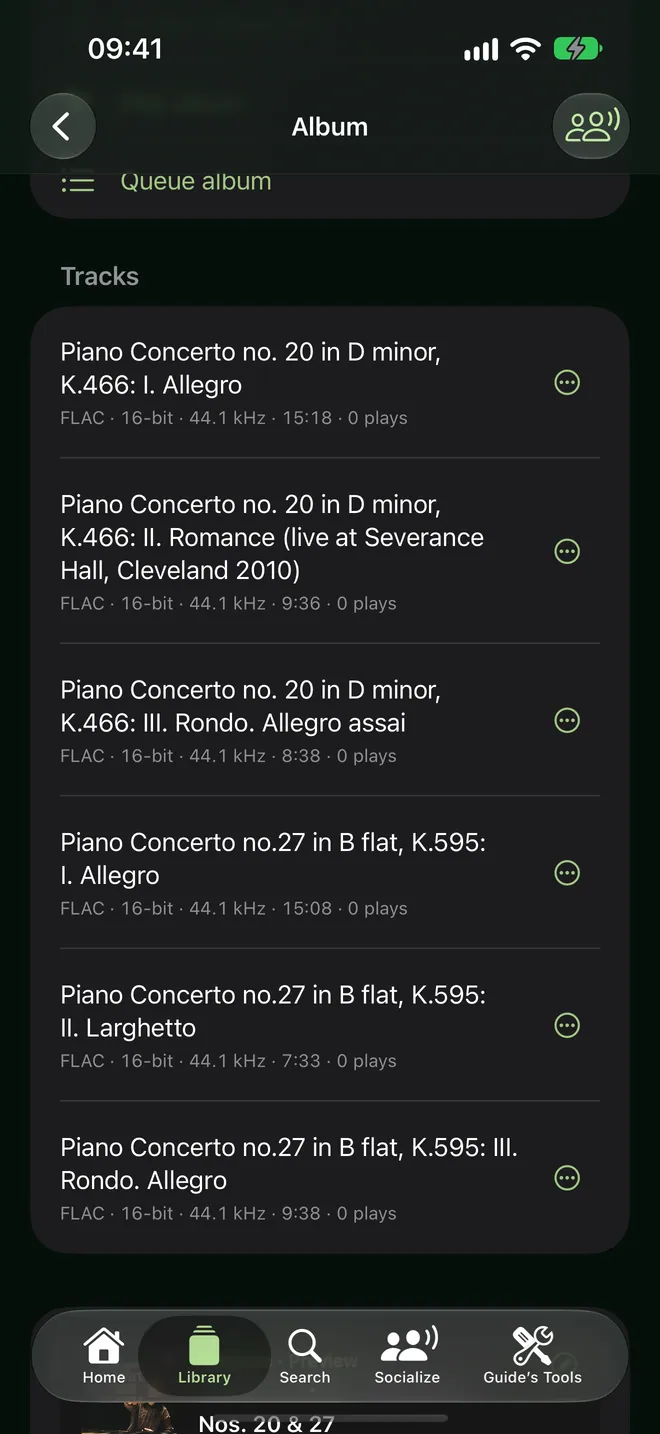
Album page on iPhone: Mozart Piano Concertos Nos. 20 & 27, Mitsuko Uchida and The Cleveland Orchestra, with every movement listed

Also in the Classical Room

Recommended

Explore different artists, with albums you have played less placed first.

More discoveries

Shuffle the suggestions for another set of albums.

Moods and topics

Curated groupings that appear only once each has at least ten playable tracks — see status below.

Listening notes

Interpretation is the conversation in classical music: tempo, balance, pedal, who leads whom. Each note separates sourced facts, named listeners’ public opinions, and our own suggestions.

These notes are written for this website. Editorial notes inside the app are under development and not yet available.

Mitsuko Uchida · The Cleveland Orchestra — Mozart: Piano Concertos No. 20, K. 466 & No. 27, K. 595 (album cover)

Mitsuko Uchida · The Cleveland Orchestra

Mozart: Piano Concertos No. 20, K. 466 & No. 27, K. 595

Guide’s Playhouse suggests

Hear the two concertos as a pair: the restless, syncopated opening of K. 466 against the calm of K. 595. With the soloist also directing, listen for how closely the winds and the piano trade phrases — this is chamber music at orchestral scale.

Facts

Mitsuko Uchida, piano and director; The Cleveland Orchestra.

Recorded live on 15, 17 and 18 April 2010 at Severance Hall, Cleveland; Decca 478 2596, released 2011.

K. 466 in D minor (1785) and K. 595 in B-flat, Mozart’s last piano concerto (1791).

Sources: musicweb-international.com · yourclassical.org

Listeners are discussing…

We did not find a public forum discussion of this recording that we could read in full, so none is quoted.

Mari Kodama — Beethoven: Piano Sonatas No. 14 “Moonlight”, No. 8 “Pathétique”, No. 4 Op. 7 (album cover)
30-second preview · Mari Kodama · Piano Sonata No. 14 · I. Adagio sostenuto

Mari Kodama

Beethoven: Piano Sonatas No. 14 “Moonlight”, No. 8 “Pathétique”, No. 4 Op. 7

Guide’s Playhouse suggests

Three sonatas, three characters. In the “Moonlight” Adagio, listen to how much pedal blurs the harmonies and how steady the triplets stay; in the “Pathétique”, to the weight of the opening Grave. Listeners disagree about whether this playing is clear or cool — a good question to bring to your own listening.

Facts

Mari Kodama, piano. PentaTone Classics PTC 5186 023, released 2004.

Part of her complete Beethoven sonata cycle for PentaTone (2003–2014).

Sources: en.wikipedia.org

Listeners are discussing…

  • Reviewing the whole cycle, finds Op. 7 swift and bubbly (“good”), the Moonlight Adagio slightly tense with little sustain, and the Pathétique’s Grave lacking heft though its Allegro is meticulous — sometimes a marvel, sometimes clinical.

    — Todd, Good Music Guide, 2014-10-11 · “Rita Bouboulidi and Mari Kodama Play Beethoven”

  • Replies that he did not hear detached or clinical playing and was impressed by her Beethoven overall, while noting that she omits many repeats. (About the cycle overall; his favourites are the middle and late sonatas.)

    — Oldnslow, Good Music Guide, 2014-10-12 · “Rita Bouboulidi and Mari Kodama Play Beethoven”

Opinions of named forum members, summarised by us; follow the link to read them in context. Forum members are listeners — we don’t claim they are professional musicians.

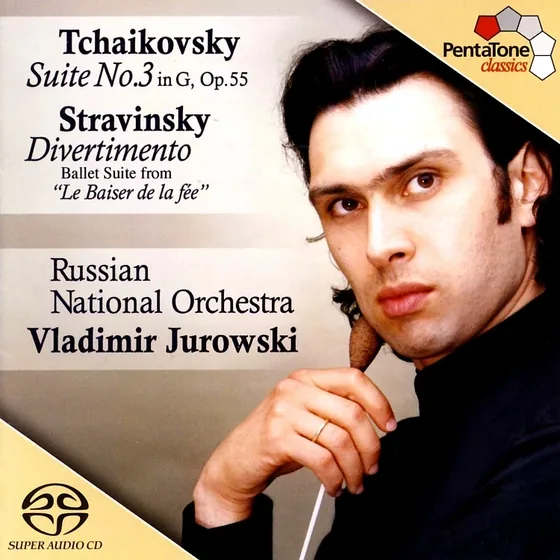
Vladimir Jurowski · Russian National Orchestra — Tchaikovsky: Suite No. 3 in G, Op. 55 · Stravinsky: Divertimento (album cover)

Vladimir Jurowski · Russian National Orchestra

Tchaikovsky: Suite No. 3 in G, Op. 55 · Stravinsky: Divertimento

Guide’s Playhouse suggests

The coupling is the point. Stravinsky built The Fairy’s Kiss as an homage to Tchaikovsky, so you hear Tchaikovsky twice — once in his own voice, once refracted. In the suite’s long final variations, follow how each variation hands the theme to a different section of the orchestra.

Facts

Russian National Orchestra, conducted by Vladimir Jurowski. PentaTone Classics PTC 5186 061 (hybrid SACD), ℗ 2005.

Suite No. 3: Élégie · Valse mélancolique · Scherzo · Tema con variazioni — the closing variations run about 19 minutes, nearly half the suite.

Coupled with Stravinsky’s Divertimento from the ballet Le Baiser de la fée (The Fairy’s Kiss).

Sources: highresaudio.com · enjoythemusic.com

Listeners are discussing…

We did not find a public forum discussion of this recording that we could read in full, so none is quoted.

Where the Classical Room stands today

Live

Albums, works and recordings, Recommended and More discoveries are part of the 1.1 app. The daily room refresh runs on the Playhouse server: preparation 05:00–05:50, publication 06:00, Bangkok time.

Under validation

Classical mood and topic categories: none is published yet. A category needs at least ten distinct playable tracks, and none has reached that today — so the server shows nothing rather than a padded list. The consolidated daily engine that will build them is being validated.

Prefer to start from a session? Enter the Jazz Room